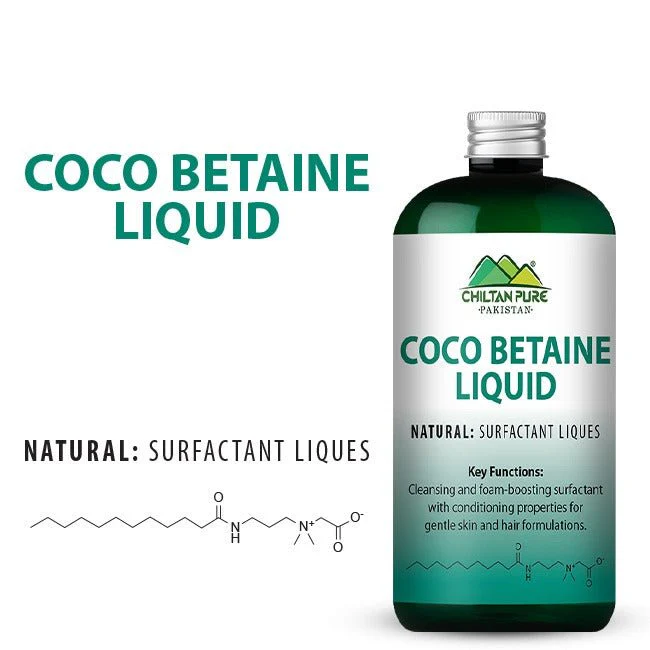
Coco Betaine Liquid / کوکو بیٹین لیکوئڈ
Coco Betaine is an amphoteric surfactant derived from the fatty acids of coconut oil, predominantly lauric acid. It belongs to the betaine class of surfactants and has been a trusted ingredient in cosmetic and personal care formulations for several decades due to its mildness, foam-enhancing properties, and broad compatibility with other actives. Its natural origin and biodegradability have made it especially popular in clean beauty, sulfate-free, and sensitive skin product lines worldwide.
What distinguishes Coco Betaine from purely anionic surfactants is its amphoteric character — it carries both positive and negative ionic charges depending on the pH of the formulation. This dual nature allows it to function simultaneously as a foam booster, skin conditioner, and irritation reducer within a single surfactant blend. It is particularly effective when combined with anionic surfactants such as Sodium Lauroyl Methyl Isethionate or Sodium Cocoyl Isethionate to produce rich, stable lather with a noticeably improved skin feel after rinsing.
Usage & Guidelines
Skincare (Cleansers, Face Washes, Micellar Water)
Coco Betaine is outstanding in facial cleansers and micellar-type formulas due to its exceptional mildness and low irritation profile on facial skin. Use at 5–15% as a secondary surfactant paired with a gentle primary to achieve effective lather that cleanses without stripping.
Haircare (Shampoo, Conditioner, Scalp Treatments)
It is one of the most recommended co-surfactants in sulfate-free shampoo formulation, delivering foam volume, slip, and antistatic conditioning benefits in a single ingredient. Combine with Sodium Cocoyl Isethionate or Sodium Lauroyl Methyl Isethionate at 5–15% for a salon-quality cleanse with improved manageability.
Soap Making (Syndet Bars, Liquid Syndet Bases)
Coco Betaine integrates well into syndet bars where it enhances mildness and lather creaminess compared to pure anionic systems. It is not suitable for traditional cold process or hot process saponification and is best used in liquid or pressed syndet formats only.
Body Care (Body Wash, Bath Foam, Intimate Wash)
Its mildness and skin compatibility make it an excellent choice for intimate washes and bath foam concentrates where skin tolerance is a primary concern. Use at 5–20% depending on the broader surfactant system to achieve rich, stable foam with a pleasant conditioning after-feel.
Functional Cosmetics (Baby Care, Sensitive Skin Products)
Coco Betaine is one of the few surfactants considered appropriate for baby shampoos and tear-free formulations due to its low ocular irritation potential. Use at conservative concentrations of 3–8% in baby care applications and always pair with ophthalmologically tested co-surfactants before making any tear-free label claims
Original: $1.62
-65%$1.62
$0.57Product Information
Product Information
Shipping & Returns
Shipping & Returns
Description
Coco Betaine is an amphoteric surfactant derived from the fatty acids of coconut oil, predominantly lauric acid. It belongs to the betaine class of surfactants and has been a trusted ingredient in cosmetic and personal care formulations for several decades due to its mildness, foam-enhancing properties, and broad compatibility with other actives. Its natural origin and biodegradability have made it especially popular in clean beauty, sulfate-free, and sensitive skin product lines worldwide.
What distinguishes Coco Betaine from purely anionic surfactants is its amphoteric character — it carries both positive and negative ionic charges depending on the pH of the formulation. This dual nature allows it to function simultaneously as a foam booster, skin conditioner, and irritation reducer within a single surfactant blend. It is particularly effective when combined with anionic surfactants such as Sodium Lauroyl Methyl Isethionate or Sodium Cocoyl Isethionate to produce rich, stable lather with a noticeably improved skin feel after rinsing.
Usage & Guidelines
Skincare (Cleansers, Face Washes, Micellar Water)
Coco Betaine is outstanding in facial cleansers and micellar-type formulas due to its exceptional mildness and low irritation profile on facial skin. Use at 5–15% as a secondary surfactant paired with a gentle primary to achieve effective lather that cleanses without stripping.
Haircare (Shampoo, Conditioner, Scalp Treatments)
It is one of the most recommended co-surfactants in sulfate-free shampoo formulation, delivering foam volume, slip, and antistatic conditioning benefits in a single ingredient. Combine with Sodium Cocoyl Isethionate or Sodium Lauroyl Methyl Isethionate at 5–15% for a salon-quality cleanse with improved manageability.
Soap Making (Syndet Bars, Liquid Syndet Bases)
Coco Betaine integrates well into syndet bars where it enhances mildness and lather creaminess compared to pure anionic systems. It is not suitable for traditional cold process or hot process saponification and is best used in liquid or pressed syndet formats only.
Body Care (Body Wash, Bath Foam, Intimate Wash)
Its mildness and skin compatibility make it an excellent choice for intimate washes and bath foam concentrates where skin tolerance is a primary concern. Use at 5–20% depending on the broader surfactant system to achieve rich, stable foam with a pleasant conditioning after-feel.
Functional Cosmetics (Baby Care, Sensitive Skin Products)
Coco Betaine is one of the few surfactants considered appropriate for baby shampoos and tear-free formulations due to its low ocular irritation potential. Use at conservative concentrations of 3–8% in baby care applications and always pair with ophthalmologically tested co-surfactants before making any tear-free label claims